Proposals work differently in an accounting firm. You’re not just quoting a project. You’re setting a fee (usually a recurring one), pinning down scope so it doesn’t creep, getting an engagement letter signed, and then billing that client every month for years. A tool that only spits out a nice PDF covers about a third of that.
Which is why the search results for accountant proposal software are such a mixed bag. Proposal software platforms for accountants really come in three types. Some are accounting proposal software in the strict sense: built only for accounting firms, with engagement letters and recurring billing baked in. Some are practice management suites that happen to include proposals. And some are general proposal tools any service business can use. You’ll find all three below, because they solve different problems.
Here’s our take on the best proposal software for accountants: eight options, what each one actually does, what it costs, and who it fits. We make one of them, so where Proposal.biz isn’t the right pick, we’ll say so.
What to look for in proposal software for accounting firms
Before you compare tools, figure out which of these matter most to your firm:
- Engagement letters. Does the tool generate one from an accepted proposal, or do you handle the terms separately?
- Recurring billing and accounting sync. Does a signature kick off billing, and does it talk to QuickBooks or Xero?
- Pricing consistency. A fee calculator or service catalog stops two partners quoting the same work differently.
- Speed. How long does a proposal for a new client take, from blank page to sent?
- Branding and tracking. Does the proposal look like your firm, and can you see when a client opens it? (Our guide to tracking proposal engagement covers what to watch.)
- Cost model. Per user, per client, per payment, or flat. They behave very differently as your firm grows.
Quick comparison
| Tool | Type | Strongest at | Starting price |
|---|---|---|---|
| Proposal.biz | General, AI-first | Fast, branded, AI-drafted proposals | Free plan; paid from $19/month |
| Ignition | Built for accountants | Proposal to recurring billing | $49/month (Solo) |
| GoProposal | Built for accountants | Pricing consistency, engagement letters | $75/month (Solo) |
| Cone | Built for accountants | Low-cost proposal and billing | About $9 to $12 per user/month |
| Anchor | Built for accountants | Billing with no subscription | $5 per payment received |
| TaxDome | Practice management | Running the whole practice | $800 per user/year |
| Karbon | Practice management | Workflow-led firms | $59 per user/month (annual) |
| PandaDoc | General | Mature all-purpose platform | $19 per user/month (annual) |
Proposal tools for accountants, from general to accounting-specific
1. Proposal.biz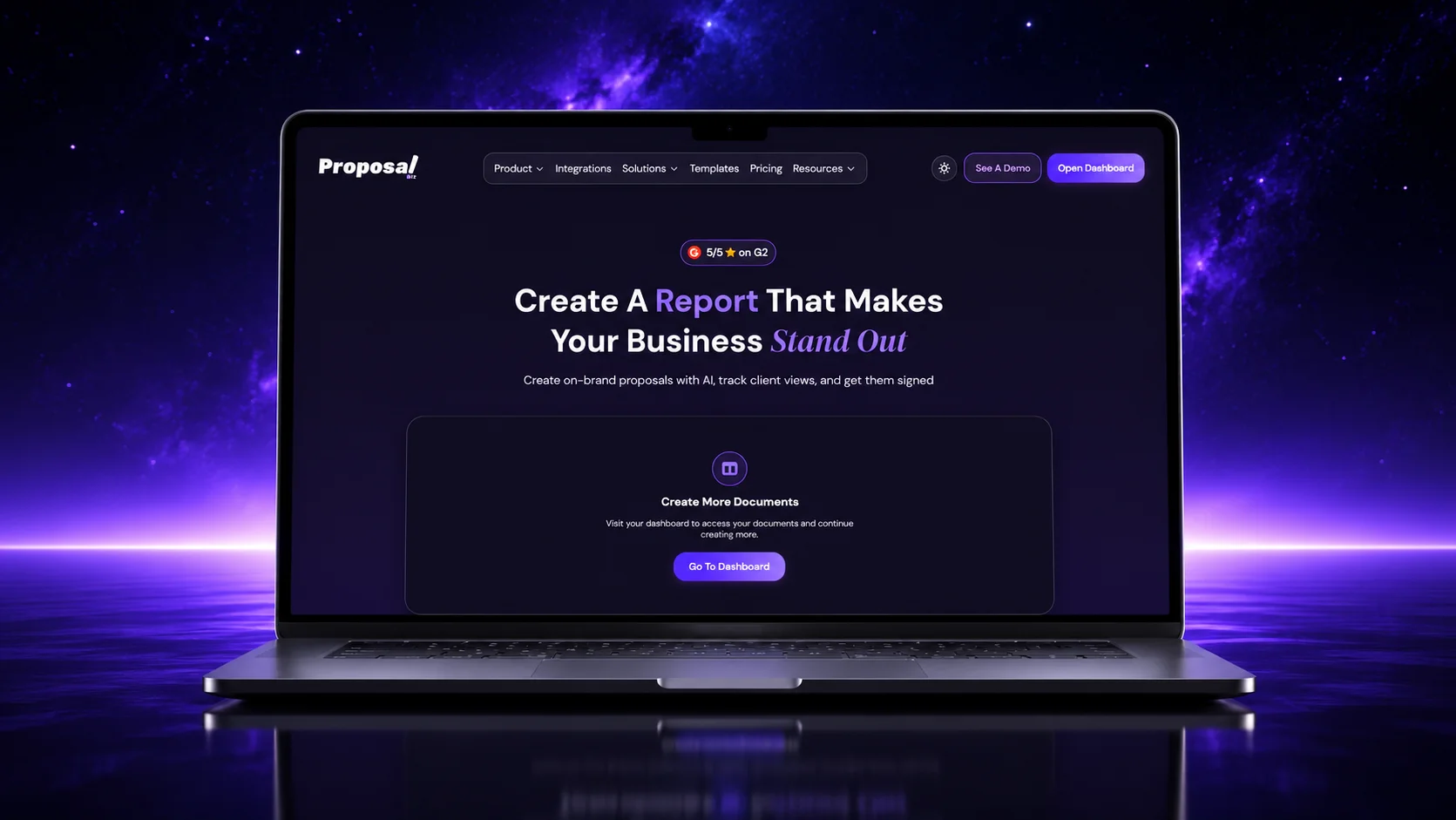
Proposal.biz is a general, AI-first proposal platform, built for professional services teams as much as sales teams. Paste in a prompt or your website URL and it drafts a full, branded document. From there you can edit by chatting with the document (shorten a section, change the tone) or use the drag-and-drop editor, and an AI review flags weak spots before you hit send. Every plan includes e-signatures, and you can see when a client opens the proposal. The content library holds your service descriptions and pricing text, so a new proposal starts from your own wording instead of a blank page.
It also handles service agreements, NDAs and statements of work in the same workspace, so the engagement paperwork can sit right next to the proposal. The professional service agreement template is a good place to start.
The free forever plan gives you one seat, 50 documents and 1,000 AI credits. Paid plans start at $19 a month ($15 if you pay annually) at current pricing. Free and Starter documents carry Proposal.biz branding. To remove it you’ll need the Professional plan ($39 a month, or $31 annually), which also adds per-section engagement heatmaps and three seats. Full details are on the pricing page.
What it doesn’t do: there’s no native QuickBooks or Xero integration, no built-in library of engagement letters written to accounting-body standards, and payment collection inside documents is listed as upcoming, not live. If you want a signature to trigger recurring invoices on its own, one of the accounting-native tools below is a better fit.
Best for: solo accountants and small firms that want fast, well-branded proposals and like the idea of starting free, plus firms that already handle billing in their accounting software.
2. Ignition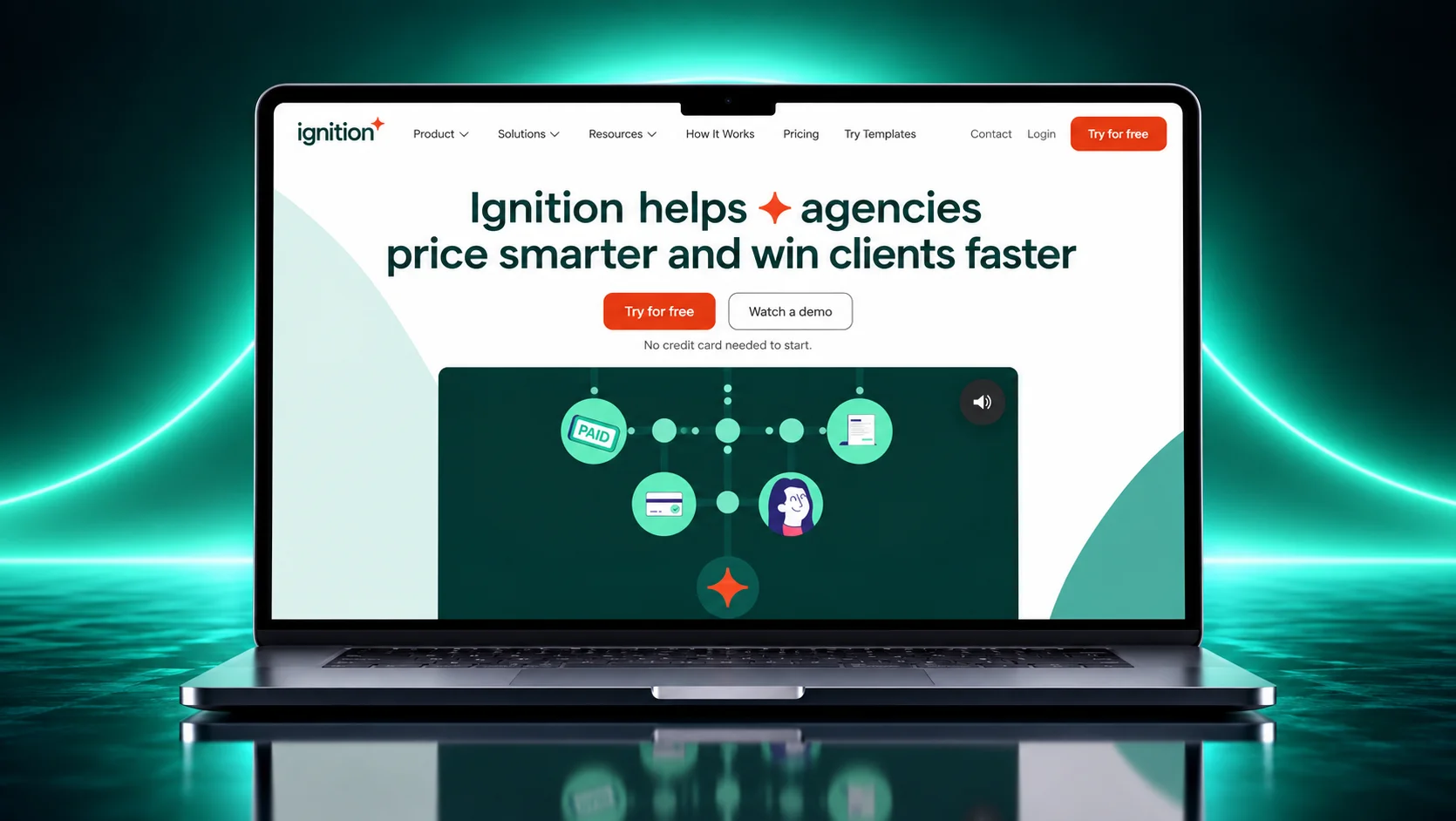
Ignition is one of the most complete accounting-specific options here, and for billing automation it’s the one to beat. Proposals, engagement letters, e-signatures and payments all run in a single flow. The client sees the scope, pricing, engagement letter and payment form together, and one signature can kick off the billing. Payment details are captured upfront, recurring fees can be collected by card or ACH, and it connects natively to QuickBooks Online and Xero, with links to practice tools like Karbon and TaxDome. Its engagement letter templates are legally vetted.
There’s no free plan, just a 14-day trial. Per Capterra’s listing, Solo starts at $49 a month ($39 on annual billing) for one user and 20 active clients. Core is $149 for three users and 50 clients, Pro is $279, and Pro+ is $499. Extra active clients cost a small monthly fee, and payment processing comes with its own fees.
The catch is cost. It climbs as your client list grows, and reviewers often call it pricey for small firms.
Best for: firms that want a signed proposal to turn into automated recurring billing.
3. GoProposal (by Sage)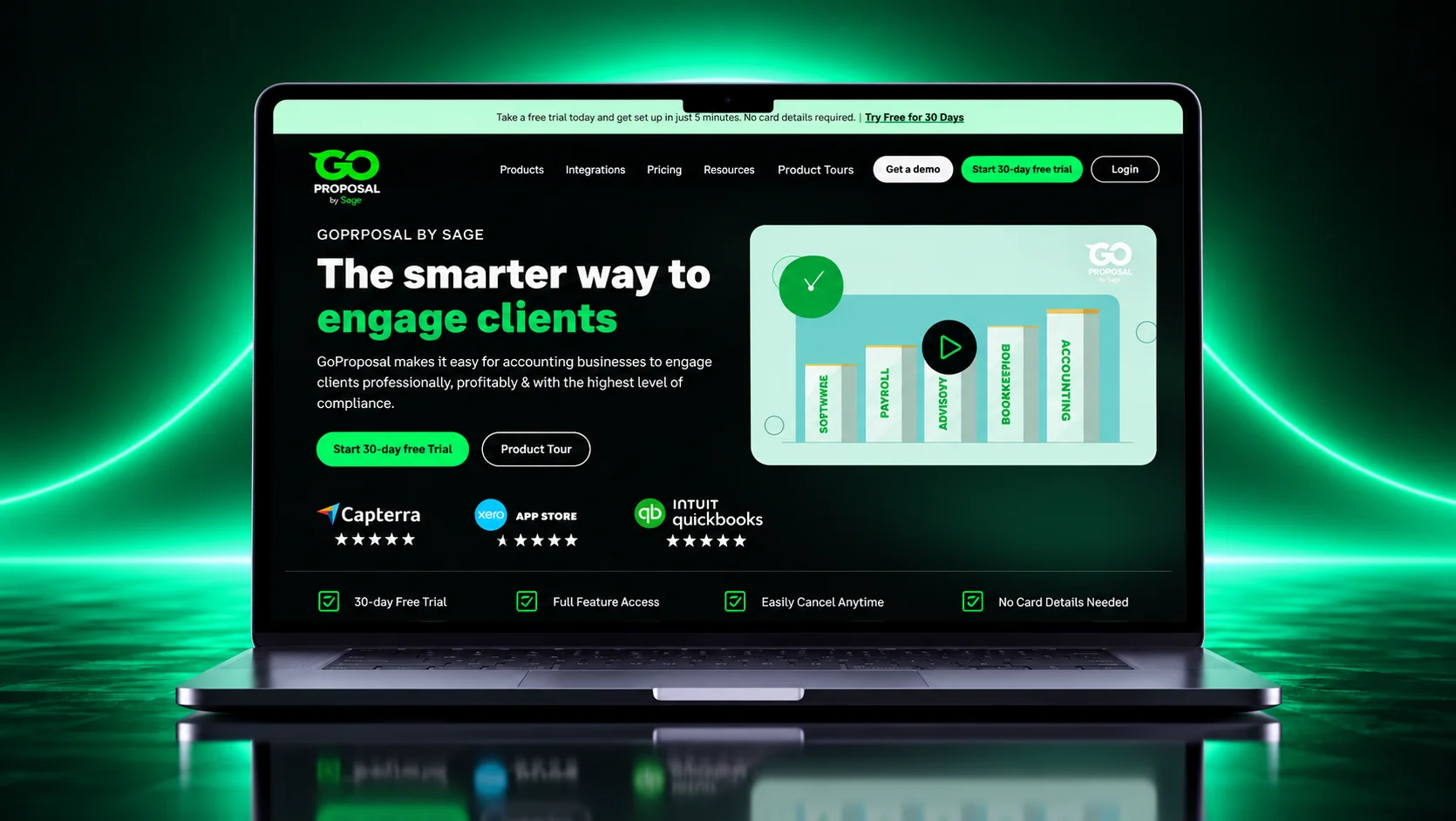
GoProposal, owned by Sage, is really about the pricing side. Its pricing wizard helps you build consistent fees from benchmark data, so partners aren’t quoting the same work differently, and proposals are built from a service menu a client can walk through in a meeting. Engagement letters come through the OverSuite add-on, which is sold separately and lines up with UK professional bodies like ICAEW and ACCA. GoProposal also offers AML and KYC checks, and connects to Xero and QuickBooks.
Sage’s US pricing page lists Solo at $75 a month (5 proposals), Basic at $120 (10 proposals), Standard at $150 (50 proposals) and Premium at $255 (unlimited proposals).
Two things to watch: the proposal caps on the lower plans, and the fact that compliant engagement letters cost extra.
Best for: firms that care most about consistent, profitable pricing and compliance-ready engagement letters, especially in the UK.
4. Cone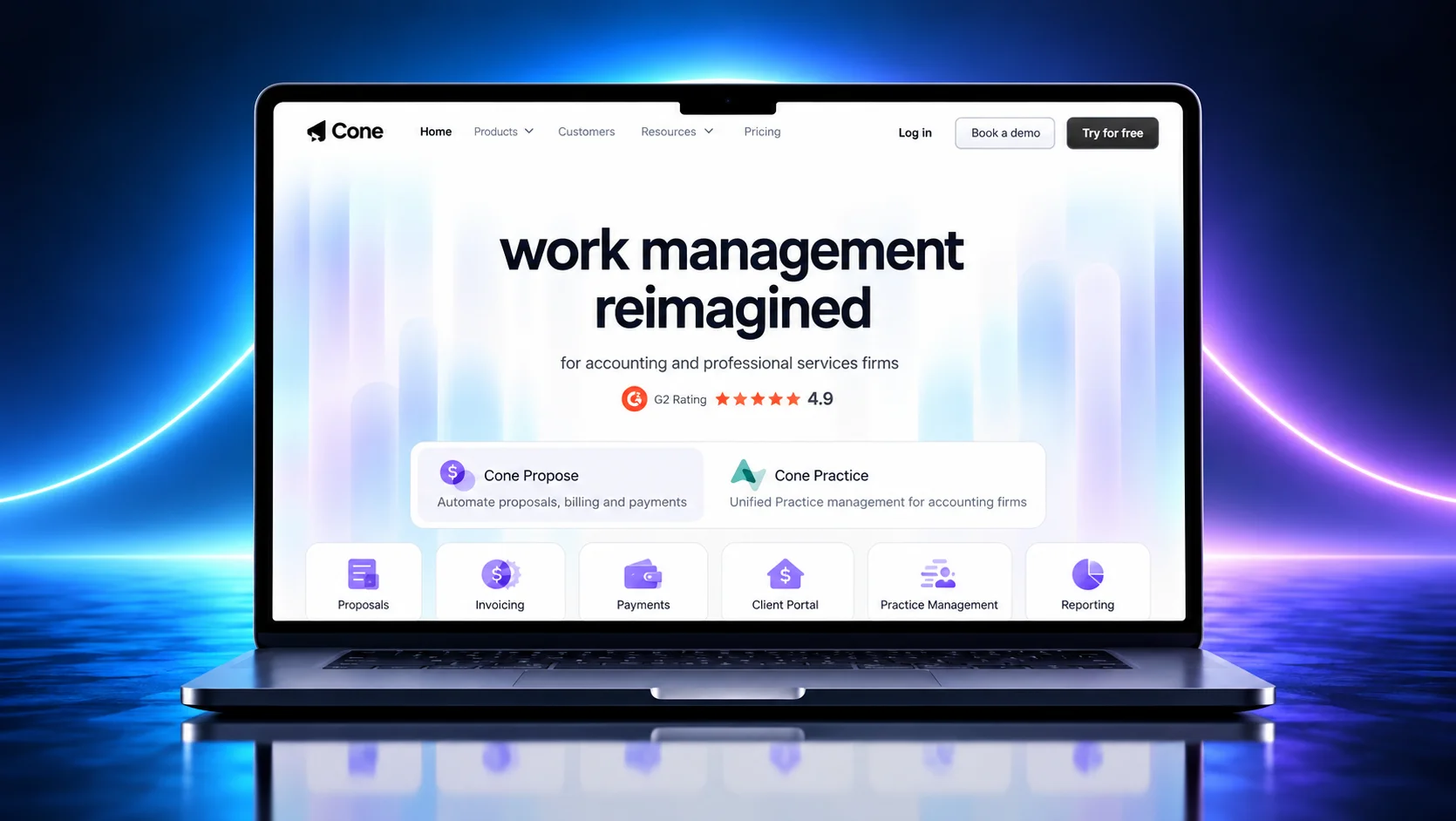
Cone is a newer, budget-friendly option built for accountants and bookkeepers, and its proposal product only launched in 2024. It covers proposals, engagement letters, a pricing tool for one-off and recurring services, e-signatures, billing and payments. Invoices sync to QuickBooks Online, Xero and Zoho Books, with Stripe and GoCardless for collecting payments. There’s also a lightweight pipeline for tracking leads.
Pricing is per user. Vendor and review listings put plans at roughly $9 to $12 per user per month, lower on annual billing, with unlimited proposals and clients.
A word of caution on the evidence: most of what’s out there on Cone comes from Cone itself, and there’s a smaller pool of independent reviews than for Ignition or TaxDome. One independent review calls its feature set smaller than the established tools. Test it on a real proposal before you commit.
Best for: small firms and bookkeepers who want proposal-to-billing automation at a lower price.
5. Anchor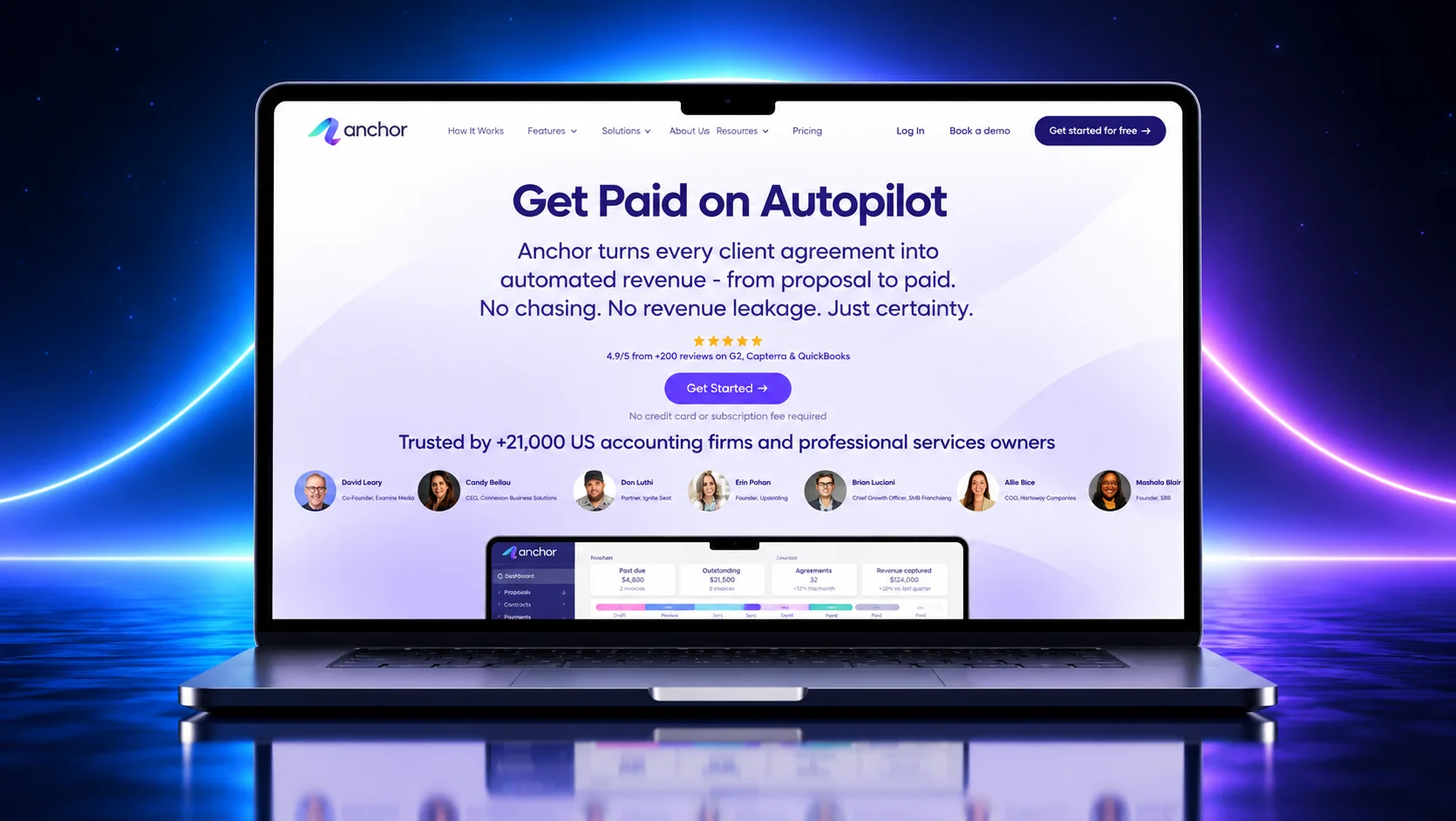
Anchor does pricing differently: no subscription, just $5 per payment received, with unlimited users, clients and proposals. The proposal and agreement exist to capture a signature and a payment method. After that Anchor invoices, collects by ACH or card, and reconciles with QuickBooks Online and Xero. It’s built around accounting and professional services firms getting paid on time.
The tradeoff: the proposal itself is a template you fill in by hand, and fees grow with payment volume. A firm collecting 50 client payments in a month pays about $250 that month.
Best for: firms that want billing and collections automated without a monthly software fee, and don’t need help writing the proposal.
6. TaxDome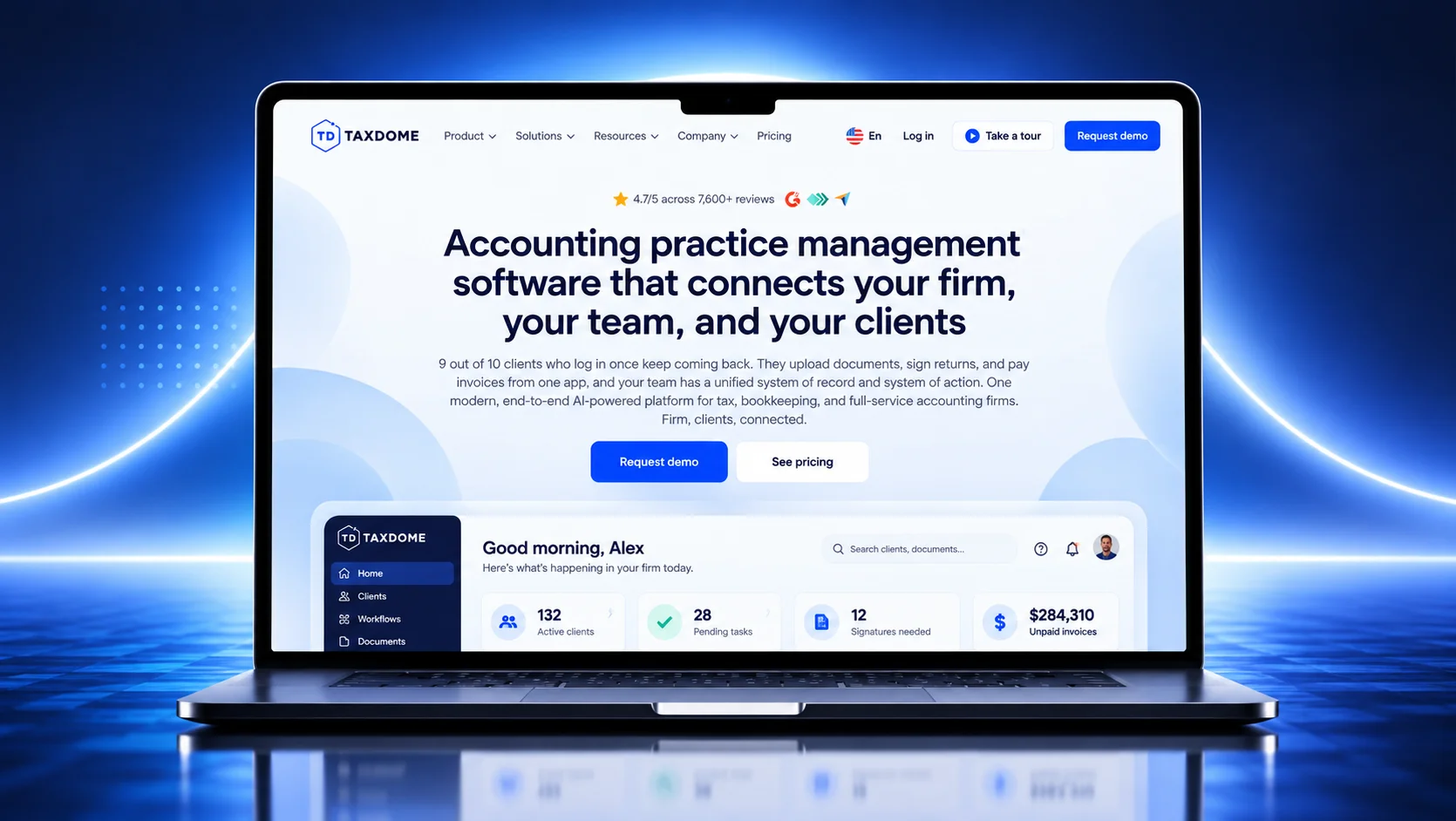
TaxDome is a full practice management platform, and proposals are just one piece of it. You get a client portal, CRM, workflow pipelines, document storage, unlimited e-signatures, proposals and engagement letters, invoicing and payment collection. It integrates with QuickBooks Online.
Pricing is per user per year: Essentials is $800 (single user only), Pro is $1,000 and Business is $1,200, according to Capterra, mostly billed annually upfront.
The catch is scope. You’re paying for the whole platform, so if all you want is better proposals it’s more than you need, and per-user pricing adds up fast for bigger teams.
Best for: tax-heavy firms that want to run the practice (portal, workflows and proposals) from one system.
7. Karbon
Karbon is workflow-first practice management, built around a shared team inbox, task and workflow management, client tasks and time tracking. Proposals live inside a feature called Engagements, which covers proposals and billing. Plenty of firms still pair Karbon with Ignition for proposals, and Ignition can create the job and contact in Karbon when a proposal is signed.
Pricing is per user: Team is $59 a month on annual billing ($79 monthly), Business is $89 annually ($99 monthly), and Enterprise is custom.
Watch out for per-seat costs that scale quickly, and for the fact that proposals are a smaller part of the product than workflow.
Best for: firms that already run their work through Karbon.
8. PandaDoc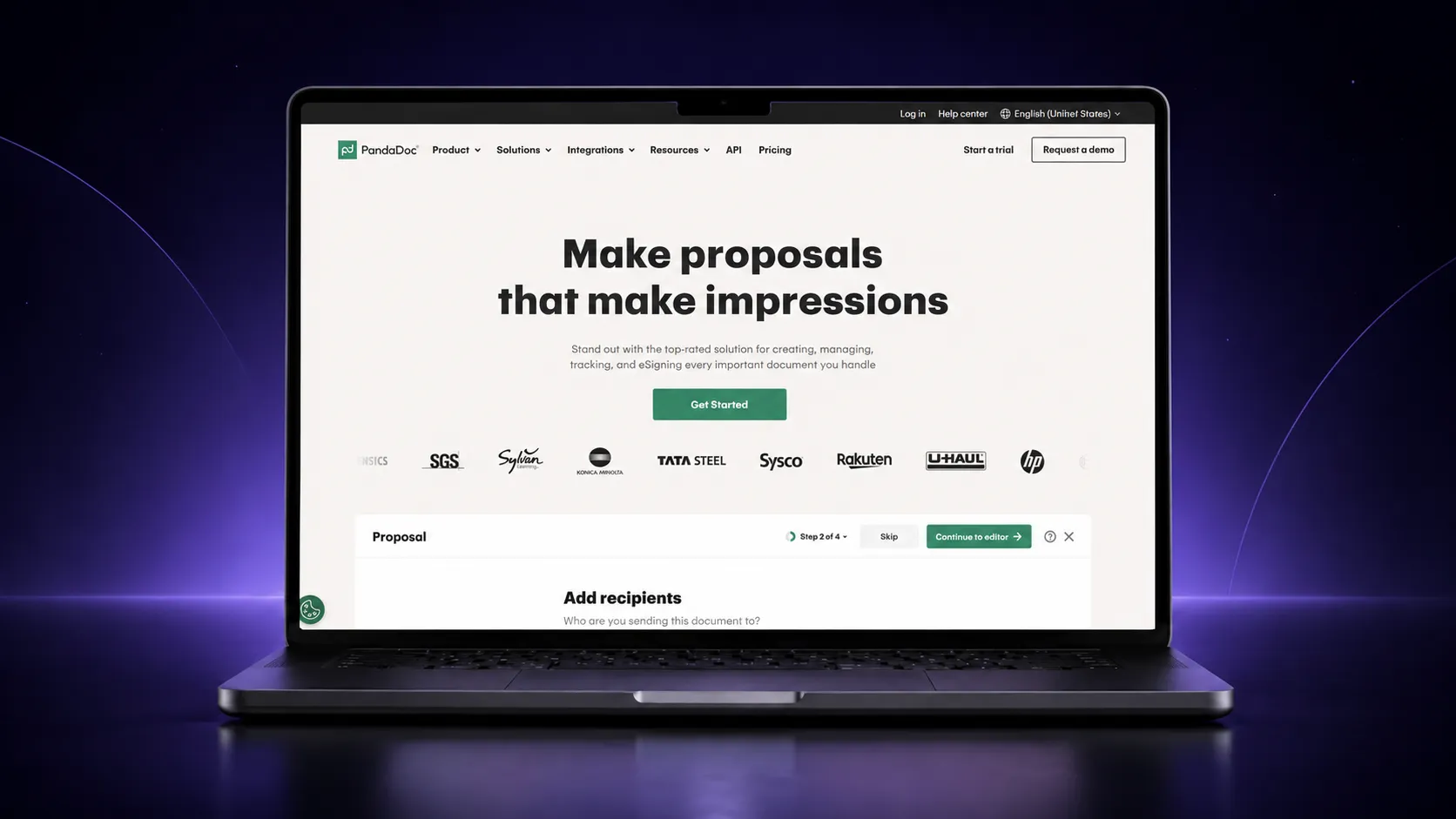
PandaDoc is a general document platform used across lots of industries, and accountants use it too. You get templates, drag-and-drop editing, e-signatures, analytics, a content library and integrations that include QuickBooks Online. Its AI Document Assistant drafts and rewrites copy inside individual text blocks, and it can draft the email you send with the document. It isn’t a prompt-to-full-proposal generator, so you still build the document section by section.
Pricing is per user: Starter is $19 a month on annual billing ($35 monthly), Business is $49 annually ($65 monthly), and Enterprise is custom. There’s also a free e-signature plan capped at 60 documents a year. Recent third-party breakdowns put pricing tables and payment collection on the Business tier, so check the plan before you count on them.
Watch out for the lack of an accounting-specific engagement letter library or recurring billing engine, and for seat costs that rise with your team. Our PandaDoc alternatives guide compares it with other options.
Best for: firms that already use PandaDoc across the business, or want a mature general-purpose platform.
How to choose the right proposal platform for accountants
It comes down to what you want a signed proposal to do next:
- Start recurring billing automatically: Ignition is the most complete, Cone costs less, and Anchor charges per payment instead of a subscription.
- Price consistently and issue compliant engagement letters: GoProposal.
- Run the whole practice in one system: TaxDome, or Karbon if your firm is workflow-led.
- Get fast, branded proposals with AI drafting and start free: Proposal.biz, with billing handled in your accounting software.
- Use a mature general-purpose tool: PandaDoc.
Plenty of firms end up combining two tools, say a practice management system plus a dedicated proposal tool. And if you’re still putting proposals together in Word, our comparison of proposal software vs word processors shows what changes when you switch. For a wider view beyond accounting, check our roundup of the best proposal software tools and our guide to proposal software for small businesses.
Frequently asked questions
What is the best proposal software for accountants?
It depends on what you want the signed proposal to trigger. Ignition is one of the most complete for proposal-to-billing automation, GoProposal is strongest on pricing consistency and engagement letters, and Proposal.biz is a good fit if you want fast, AI-drafted, branded proposals and can start on a free plan.
Do I need accounting-specific proposal software, or will a general tool work?
A general proposal tool for accountants works if your main need is a well-presented, signed proposal. Accounting-specific tools earn their price when you want engagement letters generated from the proposal and recurring billing that starts on signature, with QuickBooks or Xero sync.
Is there free proposal software for accounting firms?
Yes, with limits. Proposal.biz has a free forever plan with one seat, 50 documents and AI drafting. PandaDoc has a free e-signature plan capped at 60 documents a year. The accounting-specific tools in this list are paid, though most offer a trial.
Do these proposal tools connect to QuickBooks and Xero?
Ignition, GoProposal, Cone and Anchor connect to QuickBooks Online and Xero. TaxDome integrates with QuickBooks Online, Karbon connects to both, and PandaDoc integrates with QuickBooks Online. Proposal.biz doesn’t have a native QuickBooks or Xero integration today.
What is an engagement letter, and does the proposal tool need to create it?
An engagement letter sets out the scope of work, the fees and each side’s responsibilities. Some tools, like Ignition and GoProposal, generate one from an accepted proposal. With others you write the terms yourself, or draft them with AI and have them reviewed before sending.
How much does proposal software for accountants cost?
The range is wide. Anchor charges $5 per payment with no subscription, Cone runs about $9 to $12 per user a month, Ignition starts at $49 a month, and TaxDome runs $800 to $1,200 per user a year. Proposal.biz starts free, with paid plans from $19 a month.
Can AI write an accounting proposal?
Yes. Tools like Proposal.biz draft a full proposal from a prompt or your website, and you review and edit before sending. See our guide on how to write a proposal using AI for a workflow.

Join Our Newsletter
Subscribe to our newsletter to get the latest updates and offers
This site is protected by reCAPTCHA and the Google Privacy Policy and Terms of Service apply.
* Will send you weekly updates for your better business management.